



Introduction
Running a successful restaurant requires more than just great food and service – it demands well-maintained tools. Proper restaurant tool maintenance ensures your kitchen operates efficiently and your dining area leaves a lasting impression. In this guide, we’ll explore two critical aspects: knife sharpening techniques and glassware polishing methods. By mastering these skills, you can enhance safety, streamline operations, and elevate your guests’ experience. Let’s dive into practical steps and tips to keep your restaurant’s tools in top shape.

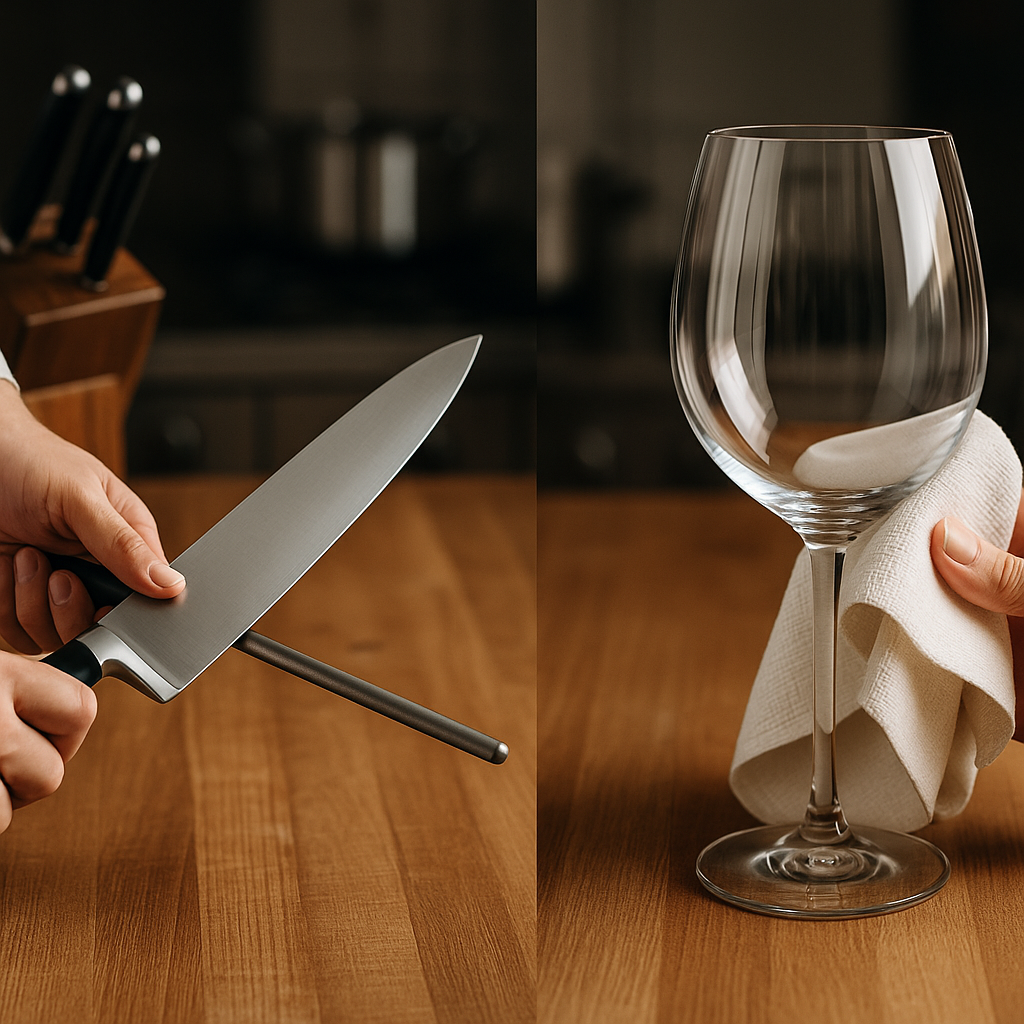
Knife Sharpening Techniques
The Importance of Sharp Knives
Sharp knives are indispensable in a restaurant kitchen. They allow for precise cuts, speeding up food prep and improving presentation. More importantly, they enhance safety. The National Safety Council notes that dull knives increase accident risks, as they require more force, making slips more likely. Regular sharpening is a cornerstone of restaurant tool maintenance that no kitchen can overlook.
Methods of Sharpening Knives
There are several effective ways to sharpen knives, each suited to different needs:
- Whetstone: A traditional method offering unmatched control. Ideal for chefs who value precision.
- Honing Rod: Perfect for daily maintenance, realigning the blade’s edge between sharpenings.
- Electric Sharpener: Fast and efficient, great for high-volume kitchens needing quick results.
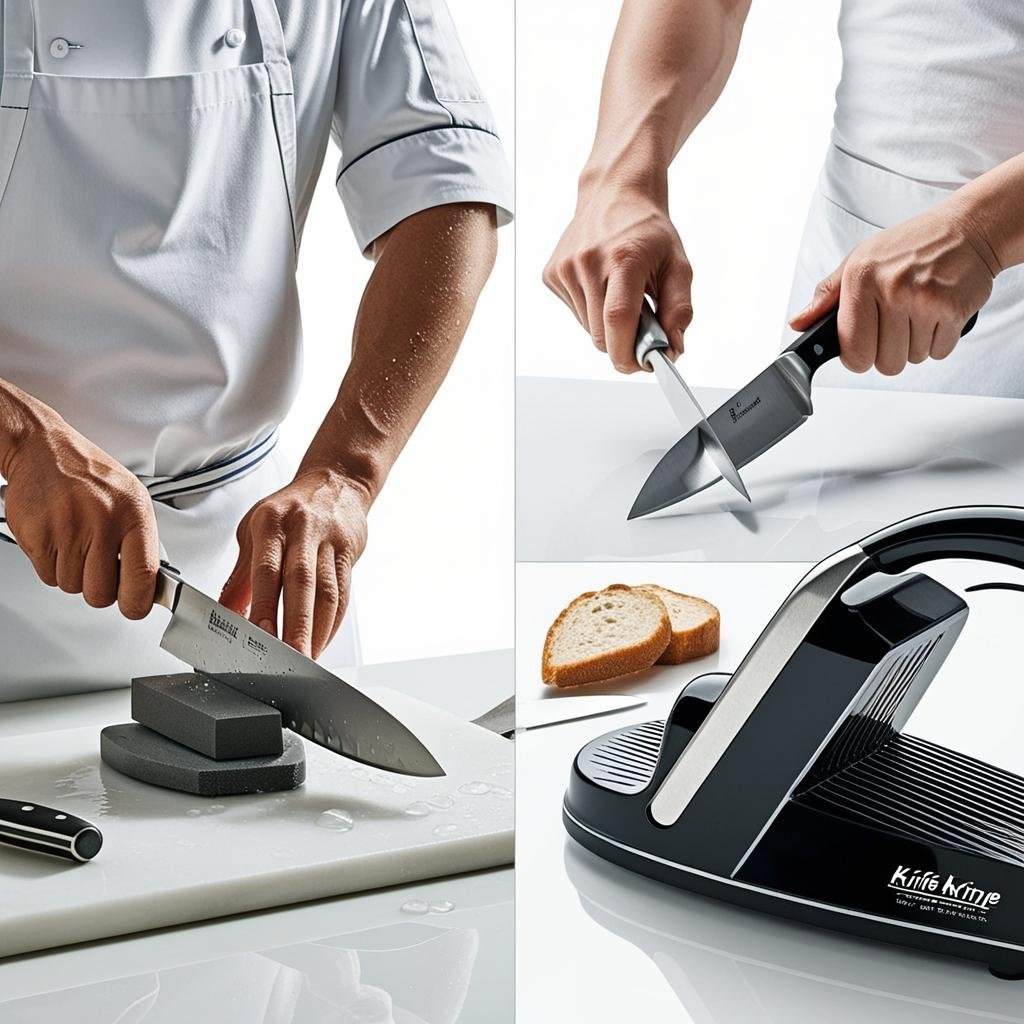
Step-by-Step Knife Sharpening
Using a Whetstone
- Soak the whetstone in water for 10-15 minutes until bubbles stop forming.
- Place it on a stable surface, coarse side up.
- Hold the knife at a 15-20° angle to the stone.
- Starting at the blade’s heel, slide it across the stone toward you with light pressure.
- Repeat on the other side, alternating for 5-10 strokes per side.
- Switch to the fine side and polish the edge with the same technique.
Tip: Whetstones come in grits (e.g., 400 for reshaping, 1000 for sharpening, 4000+ for polishing). Choose based on your knife’s condition.
Using a Honing Rod
- Stand the rod vertically, tip on a stable surface.
- Position the knife at a 15-20° angle against the rod.
- Swipe the blade downward from heel to tip, alternating sides for 5-10 passes.
Note: Honing maintains sharpness but doesn’t replace full sharpening.
Using an Electric Sharpener
- Check the manufacturer’s guide for your model.
- Pull the knife through the coarse slot, then the fine slot, as directed.
- Wipe the blade clean to remove metal residue.
Example: Chef’sChoice Trizor XV is a top pick for busy kitchens.
Tips for Maintaining Knife Sharpness
- Hone Regularly: Use a honing rod before each shift.
- Sharpen Periodically: Full sharpening every few months keeps blades optimal.
- Store Smart: Use a knife block or magnetic strip to protect edges.
- Cut Wisely: Avoid hard surfaces like glass; opt for wooden or plastic cutting boards.
Fact: A Culinary Institute of America study suggests sharp knives can cut prep time by up to 20%.
Glassware Polishing Techniques
The Significance of Polished Glassware
Spotless glassware reflects a restaurant’s attention to detail and hygiene standards. Smudged or water-spotted glasses can ruin a drink’s presentation and customer perception. As part of restaurant tool maintenance, polished glassware ensures beverages look and taste their best, enhancing the dining experience.
Tools and Materials for Polishing
You’ll need:
- Lint-Free Cloths: Microfiber or polishing towels prevent streaks.
- Mild Detergent: For thorough cleaning.
- Distilled Water: Reduces water spots from mineral deposits.
- Optional: Glass polishing machines for high-volume needs.
Recommendation: Try Ecolab’s microfiber polishing cloths for professional results.
Polishing Techniques
- Wash glassware in hot, soapy water or a dishwasher with a gentle cycle.
- Rinse with distilled water to eliminate spots.
- Air dry upside down on a clean towel.
- Hold the glass by the base or stem to avoid fingerprints.
- Polish with a lint-free cloth in circular motions.
- For tough spots, use a damp cloth with a vinegar-water mix (1:1 ratio).
- Check against light to confirm clarity.
Example: At Odette, a renowned fine-dining restaurant in Singapore, meticulous attention to glassware presentation is a key element of their 3-Michelin star dining experience, contributing significantly to customer satisfaction.
Best Practices for Glassware Care
- Avoid Stacking: Prevents scratches and chips.
- Handle Gently: Reduces breakage risk.
- Inspect Regularly: Discard chipped or cracked pieces.
- Train Staff: Consistency is key to quality.
Eco-Tip: Using distilled water and biodegradable detergents cuts down on chemical use.
Conclusion
Effective restaurant tool maintenance – through knife sharpening and glassware polishing – drives efficiency, safety, and guest satisfaction. Sharp knives streamline kitchen work and reduce risks, while polished glassware elevates presentation and hygiene. Implement these techniques at your establishment to see tangible improvements. For more restaurant management insights, visit fuluxe.com and share this guide with your team!